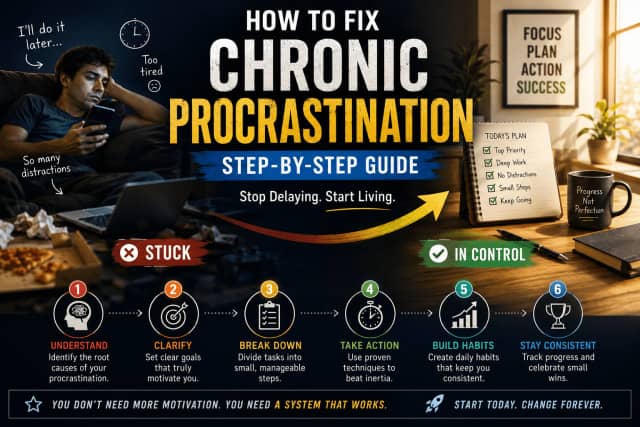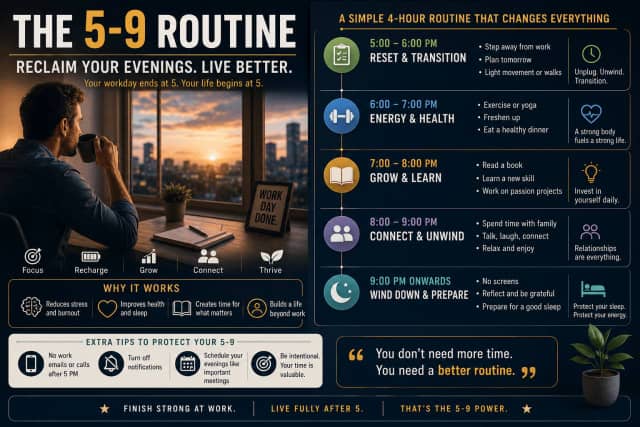
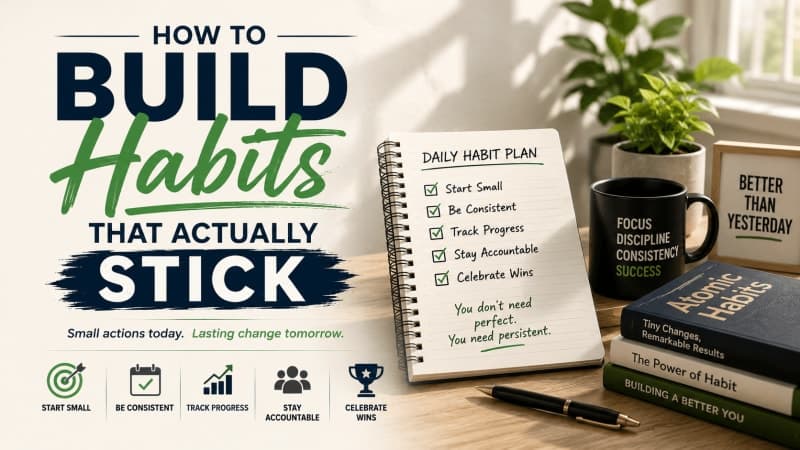
How to Build Habits That Actually Stick: The Science-Backed Guide
Why 92% of New Habits Fail Within the First Month
You've done it before. New Year's Day hits, you write down a list of habits you're finally going to stick to, and by February the gym bag is back in the closet. If this sounds familiar, you're not lacking discipline — you're using the wrong system.
Habit formation isn't about willpower. It's about design. Once you understand how your brain actually builds automatic behavior, sticking to a habit stops feeling like a fight and starts feeling like gravity.
The Real Reason Habits Fall Apart
Most people build habits around motivation. The problem? Motivation is a mood, not a strategy. It shows up when things are easy and disappears the moment life gets stressful, busy, or boring — which is exactly when you need the habit most.
Lasting habits are built on systems, not feelings. Here's how to build one that survives your worst weeks, not just your best ones.
1. Shrink the Habit Until It's Almost Embarrassing
The biggest mistake people make is starting too big. "I'll work out for an hour every day" sounds ambitious, but it's fragile — miss one day and the whole plan collapses.
Instead, shrink the habit to something so small it feels silly to skip:
- Instead of "read for 30 minutes" → "read one page"
- Instead of "meditate for 20 minutes" → "sit quietly for 2 minutes"
- Instead of "write 1,000 words" → "open the document and write one sentence"
Small habits are easy to keep on hard days — and hard days are when your habit identity is actually built.
2. Attach the New Habit to an Existing One
Your brain doesn't like remembering to do new things. It likes triggers. Instead of relying on memory or motivation, stack your new habit onto something you already do without thinking.
After I [current habit], I will [new habit].
Examples: "After I pour my morning coffee, I will write down one thing I'm grateful for." "After I brush my teeth, I will do 10 push-ups." The existing habit becomes the cue — no willpower required.
3. Make the Habit Visible
Out of sight really is out of mind. If your habit requires effort to access — the yoga mat buried in a closet, the guitar in its case, the vitamins in a drawer — you'll skip it on low-energy days.
Put visual cues directly in your path:
- Leave your running shoes by the front door
- Keep a water bottle on your desk, not in your bag
- Put your journal on your pillow so you see it before bed
4. Track It — But Keep It Simple
A simple checkmark on a calendar does something powerful: it turns an invisible habit into visible progress. You don't need an app with streaks and badges. A basic paper calendar with an X for every day you show up works just as well, and research on habit tracking consistently shows that visual progress increases follow-through.
The goal isn't a perfect streak. It's "don't break the chain twice in a row." Missing one day is human. Missing two is the start of a new pattern — so treat the second day as the one that matters most.
5. Forgive the Bad Days Fast
Here's what separates people who build lasting habits from people who don't: it's not that they never miss a day. It's that they don't let one missed day turn into a story about who they are.
"I missed the gym today" is a fact. "I always fail at this" is a story — and it's the story that actually kills habits, not the missed day itself. Notice the story, and get back to the small version of the habit tomorrow.
6. Build Identity, Not Just Behavior
The most durable habits aren't things you do — they're things you are. Someone trying to run three times a week is fighting their own resistance every time. Someone who has started thinking of themselves as "a runner" doesn't need to fight — skipping a run would feel inconsistent with who they are.
Every time you complete your small habit, you're casting a vote for the identity you want. One push-up is a vote for "I'm someone who takes care of their body." One page read is a vote for "I'm a reader." Stack enough votes, and the identity becomes real — and the behavior becomes automatic.
Your First Step, Starting Today
Don't try to overhaul your whole life this week. Pick one habit. Shrink it down until it feels almost too easy. Stack it onto something you already do. Make it visible. Track it with one checkmark a day.
That's the entire system. No motivation required — just design.